
The North Shore Circuit
Carry the outline to the north side
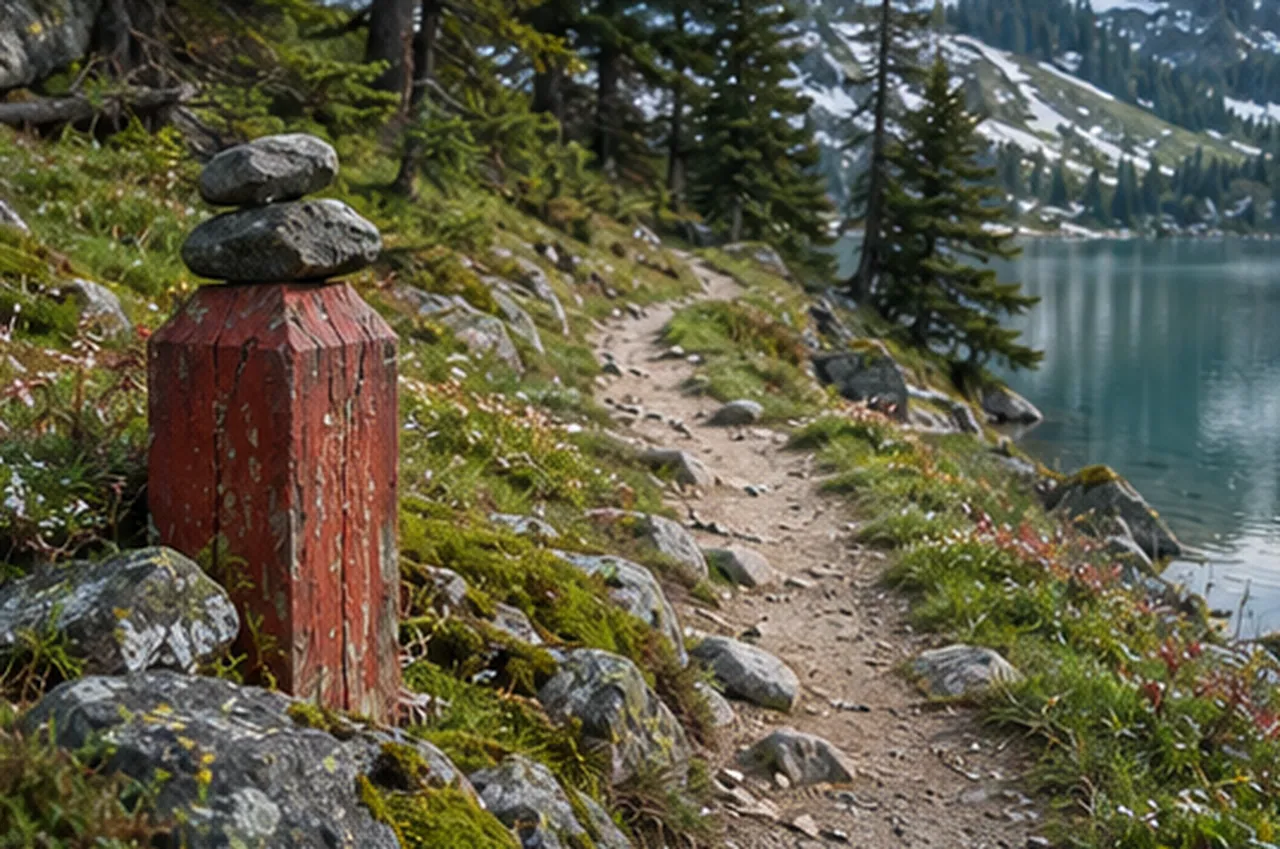
The long circuit begins with a small bend on the north side of the lake. Snow covers the upper peak, and its reflection lies across the trail’s first sightline. Leave the low opening and follow a path behind the first pile of stones. After the path moves upward, the left bank becomes visible again. Register a place where the shore makes a dark triangle. That triangle will show up again from either side of the next junction.
Plan for a passage with no view
Two branches carry the walk around a shelf. One follows reeds toward the next curve. The other rises beyond a low face of rock and crosses a short patch with no visible water. The circuit lets the player take either branch if they keep enough context for the next decision. Look for the rounded shoulder where the solid shore crosses the imagined line of the mountain’s reflection.
Notice what early snow covers
The low branch can be almost completely bare while the higher path holds a strip of snow under the slope. If the player uses small stones at the very edge for navigation, their pattern changes. Blue at the Snow Corner describes adding another way to recognize the underlying bank. The dark shadow above the strip stays in place after early snowfall. It returns the traveler to a position where an earlier view of the path is still recognizable.
Visit the junction from either approach
The two routes meet at a low stone step. From below it looks like a small place to turn and see the reflections. From above the step hugs the side of the path and can be easy to pass. Two Walks Reach the Same Step places one view of the water and one chipped edge where both approaches can recognize them. The player can continue around the circuit after checking how the junction joins the older path.
Make a return without retracing the same steps
Near the north headland there is a bend where the trail can turn back along a different height. One route returns beside the lake with a longer look at the water. The other goes behind a rough bank, where only the top of the peak is visible. Both lead to a second view of the same shore opening. The choice lets the person find out whether their memory of the circuit is strong enough to support the change.
Draw the landscape at two tempos
Snow makes the far ridge stand out in the early part of the circuit. The high route puts stone and tall grass close to the player, where a blue gray reflection is almost absent. The distant lake returns quickly at the junction. Those shifts keep the walking pace varied while the landmark remains grounded in the same landscape. The lower path takes more time to hide the mountain and gives a slower return.
A concept with a short connected test
The project is still a prototype. The walk now uses a short chain of banks, cairns and steep spots to test whether two paths are easy to tell apart. An eventual circuit can continue around the far lake. This test emphasizes the approach, the point where the paths rejoin, and the view the traveler brings back to the starting side. Shore Routes describes those same changes from the initial branch.