
Blue at the Snow Corner
Walk into the seasonal version
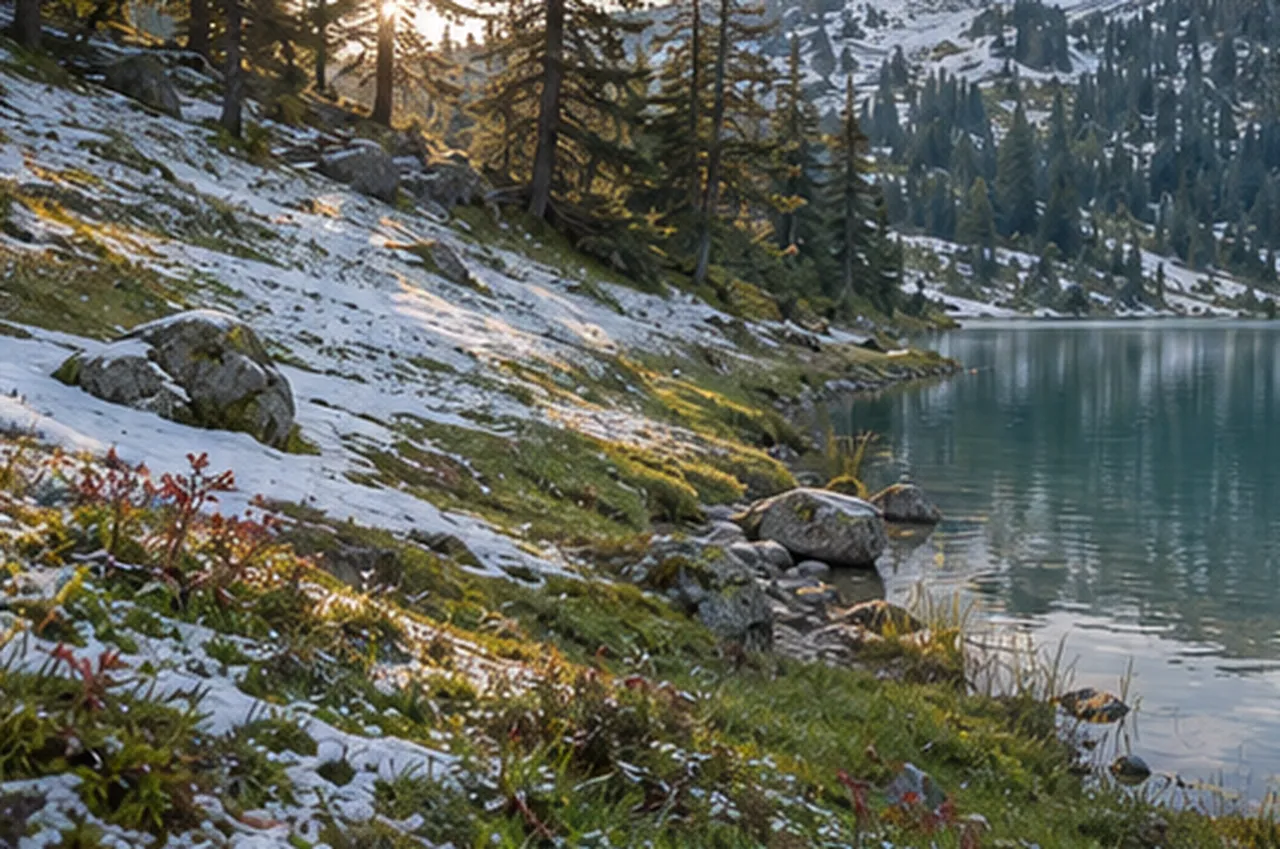
A bend on the higher track changes after a thin snowfall. The next cairn is still visible from a distance, but the patches of grass between it and the path have disappeared. A small footpath around the outside of the corner stands out strongly in the snow. In the earlier dry version the outer path was visible as a softer mark. Looking at one season after the other showed how easily a walker could mistake the bright border for the next turn.
Keep a narrow line below the slope
The wall just above the corner has a dark base that stays visible where the snow gathers unevenly. We emphasized one piece of the underlying soil as it follows the bottom of the slope. That piece connects to the direction of the bank after the end of the footpath. A person who noticed the lower dark edge in the earlier scene can now compare it with an intact part at the start of the bend.
Make the shadow wide enough to read
In sunny weather the trough beside the path shows a thin blue shadow. As the route climbs, the shadow moves closer to the edge of the incline from the player’s view. From the lower path only its wider end is visible. We kept a small overlap between the two positions. This way a marker can lead to a place where the next part of the ridge tells a similar story instead of asking the traveler to recognize a whole landscape at once.
Preserve another view of the cairn
A narrow panel on the bend shows part of the cairn against the sky. The first view includes its full shape beside two trees. A second shows only the high stone and the left tree. The lake has shifted out of sight. The background changes, but the distance between that tree and the top of the cairn remains a useful guide. The North Shore Circuit uses the two views to move between the high path and the track below.
Compare snow on the rock and on the bank
In two earlier images the snow covered the rock in the same thick layer as the slope. On the actual trail study, the outside face is more exposed and holds a thinner line. A small white patch can still make the edge hard to read. Shift the camera toward the open water until the exposed part of the rock points into the dark bank. That connection shows the route at the edge without requiring a distinctive shiny trail.
Follow a close view back to another landmark
Where a Bank Starts to Curve studies a stable shore shape near the reeds. From the higher bend the new footpath can briefly appear behind it. A person who follows that apparent continuation may end up at a small snow shelf instead of the circuit. Turn there to find which side of the cairn holds open water. The same cairn fitted beside the bank makes a useful return route without requiring the false branch to disappear.
Allow the season to change a choice
A winter version of the route may support a short walk closer to the slope because scrub along the bank has diminished. We can test that route while keeping the old return possible. Each approach should still lead toward a place where the reflected peak could be read on a calm day. This relationship gives the snow a continuing effect on the walk, and the wide lake view stays relevant after the trail enters a different landscape.
Keep both versions in the question
Notes from the Circuit points to this change from the answer about seasonal bearings. Compare the dark edge first, then try to place the cairn and the start of the new path on the same map. If one mark only makes sense after looking from above, the lower route needs a different sightline for the moment before the curve.