
Where a Bank Starts to Curve
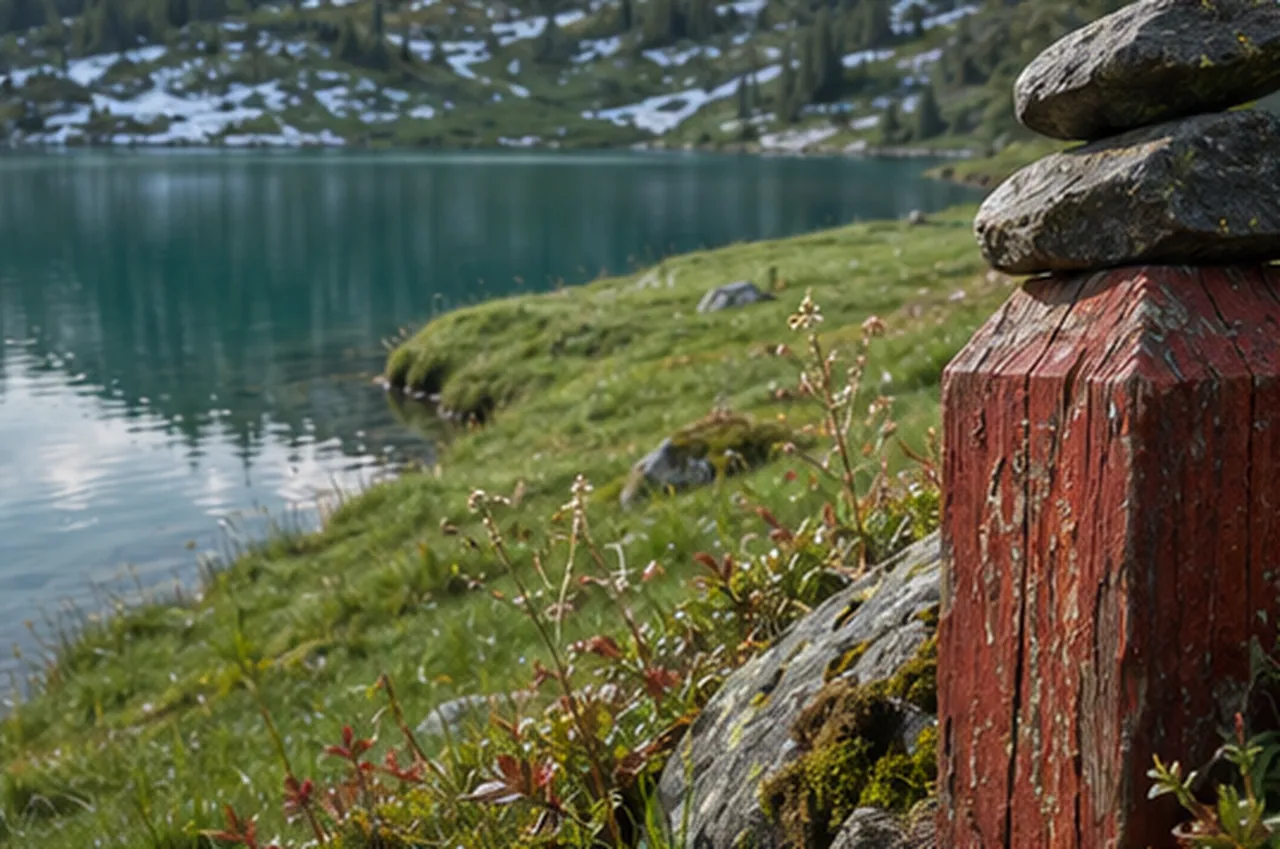
Watch the shore above the reeds
Farther around the lake, the bank makes a shallow arc that leads to a wet crossing. We first drew that arc as a smooth green edge. The reed line in front was equally smooth. When the view dropped toward the path, the two green lines almost joined and made a small inward turn look like a flat shore. The pilgrim needed a way to find the crossing from that height.
Give the curve a first corner
A small interruption from a flat stone now marks the beginning of the bend. Place the stone lower than the main pile on the path so it stays visible in the broad lake view. From the reed line its light end appears before the bank opens fully. The part of the bank immediately above it turns toward the water. That change is recognizable on a paper sketch even when none of the surrounding plants are shown.
Work across levels near the lake
The high shore shows the full reach of the arc. From below you see a short stretch between the reeds and the cairn. The low view loses the point of entry behind a small rise. Move the camera toward the cairn and one of the nearer stones lines up with the break in the far shore. A player can use that relation while deciding whether to move down toward the crossing or stay on the higher path.
Keep the lower route visible without an arrow
A pale rib under the bank appeared in several shoreline studies. At one stage it received a red line following the correct direction. That gave the start away and could make the player ignore the shape on return. We kept the rib but colored it closer to the surrounding rock. The end that reaches the water stays lighter. As the scout approaches by the lower track, its shape compares naturally with the shallow arc beyond it.
Read the curve under a different reflection
When the lake is calm, the shore appears again as a darker shape in the water. That reflection looks slightly farther away from the path than the solid bank. In wind the two are hard to tell apart for a moment before the lower one splits into lines. Mountain in the Water uses that change to establish which shape will still be there after the next turn. We preserve the original position rather than trying to move the whole scene with the reflection.
Approach from the opposite side
The cairn appears higher in the picture when you reach the edge from around the curve. From that direction the flat stone is recognizable just below it. The reeds remain between the camera and the deeper part of the bank, giving an idea of how far it goes before it slopes down. The North Shore Circuit uses this second angle after the scout has broken away from the route and needs to recover the first shape.
Find it again without looking for the stone at once
In one play test we ask the traveller to trace the direction of the wet edge before marking the cairn. If it has enough of an irregular turn, the stone can confirm the direction later. If the edge is obscured, look for where the water drops away from the plant line. These are two ways to check the same location while coming from views with different information. The map could contain a small space for both.
Preserve the drawing from both heights
Notes from the Circuit links the bank question back to this study. The image uses the cairn as an edge of the frame rather than as the center. It shows enough of the water’s quieter shape to test where the direction changes. A second image from the upper route can help the workshop decide whether the next curve needs a different clue from the one already used here.