
Mountain in the Water
Cross a thin strip of land
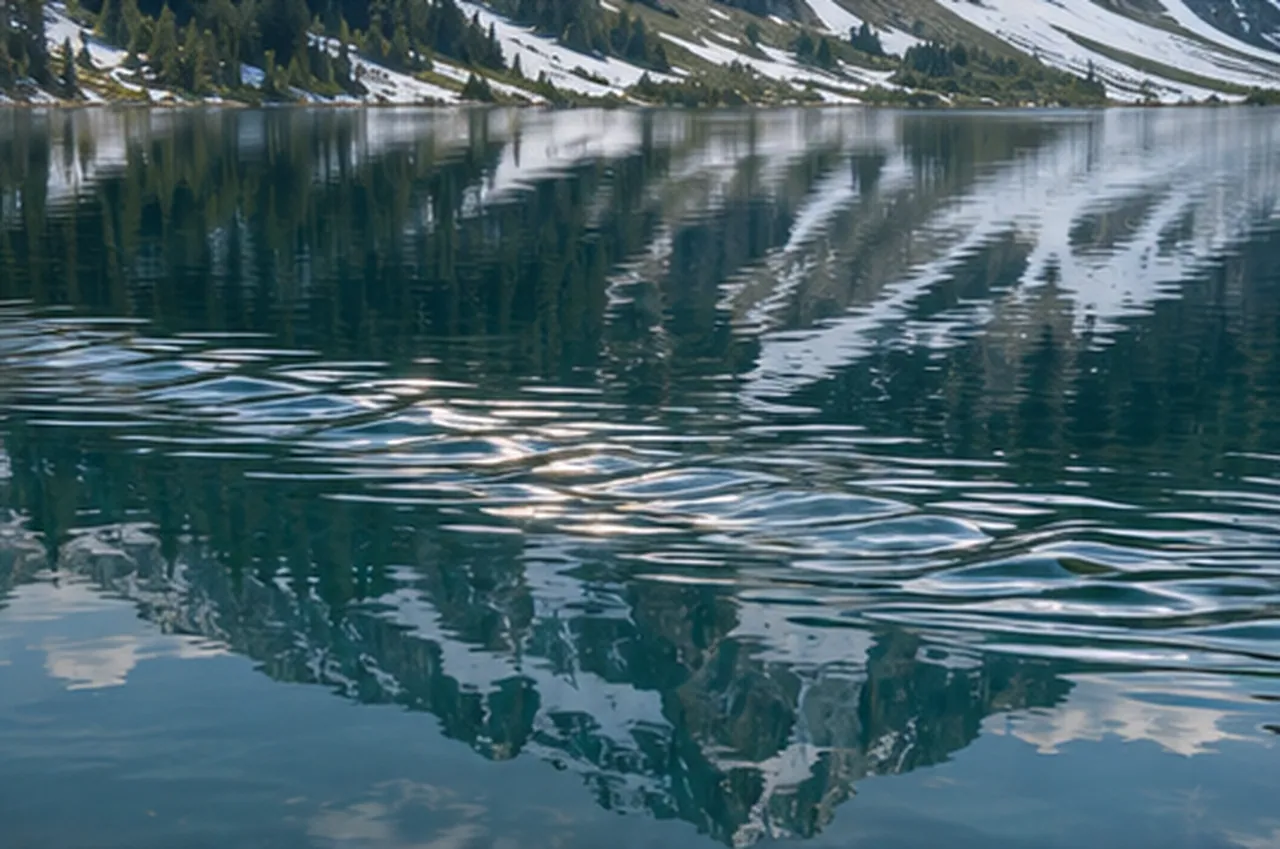
The short prototype begins outside a stone landing close to the highest part of the lake. A pale notch in the mountain also shows in the water. Put that shape next to a dark piece of the far shore and start walking along the pebble edge. At the tip of a little spit, the position of the reflection changes twice. The solid ridge feels almost fixed while the portion in the water appears to move away.
Use the narrow view first
From a low position you can read a wide dark line broken by one sliver of snow. Bring your view back up and look for the same sliver where the exposed mountain falls behind another ridge. That comparison offers a way to recognize the peak when the complete shape is unavailable. A later area gives you half the reflection behind a rocky bay, only after you find a place where its bright slope can be seen at all.
Follow evidence that travels differently
A stable part of the far bank stays visible during the first rise of wind. An area under the mountain begins to break into short blue gray lines. Knowing where the dark shoreline was helps you find the same place after the first patch of water loses color. Wind Lines across the Peak outlines the first separation into a calm edge and a changing center. The early part of the prototype preserves both of those areas as the person walks.
Compare why two views disagree
The direction of the shore moves as you step around an inward curve. The mirror image also changes shape under the movement of the water. A person can walk the earlier direction and lose the last reflection behind the bank. Another can stop near a low rock and recognize that the correct path is slightly above them. The view from near the rock gives a useful reference even when the mountain itself is out of sight.
Look at decisions in a short loop
You can reach a short crossing beyond the shore and return to the opening view. In the final wide picture the white notch is at a different height in the lake. It may seem much farther away until you see the dark far bank around it. We present those two views together at the end so a player can compare how many sections of the route depended on the moving reflection.
Let the color describe depth
The foreground water includes the dark greens near the pebbles and a few pale reflections close to the viewer. The far lake spreads into cold blue with a trace of violet. Small red marks on weathered stones can help find places to stand, but the shape of the shore does much of the work. Where a Bank Starts to Curve connects that shape to the difference between the low track and the broad view.
Where the first prototype ends
This route currently covers a short part of the pilgrimage. The play study tests if someone can remember a ridge fragment through three changes of position. Shore Routes returns a player to the wide image of the lake just before a shift in view. Later we may start a route with the mountaintop already hidden and give the person only a broken reflection until the first path around the shore opens.